

Food Safety 101: Cross-Contamination Prevention in Your Kitchen
Learn how to prevent cross-contamination in your kitchen. Cutting board safety, sink hygiene, and the FDA-recommended practices for food safety at home.

What Is Cross-Contamination?
Cross-contamination occurs when harmful bacteria from raw foods transfer to ready-to-eat foods, surfaces, or utensils. It is one of the leading causes of foodborne illness, responsible for millions of cases annually. The kitchen cutting board is the most common vector for cross-contamination.
The Cutting Board Rule
The FDA recommends using separate cutting boards for raw meat, poultry, seafood, and ready-to-eat foods like vegetables and bread. A practical solution is the Velgrina 3-in-1 Cutting Board with its dual surfaces — use the stainless steel side for raw proteins and the iroko wood side for produce and bread.
Why Stainless Steel Is Safest for Raw Meat
Stainless steel cutting boards are the gold standard for handling raw proteins because the non-porous SS304 surface cannot absorb bacteria. After cutting raw chicken on a stainless steel board, a simple wash with hot soapy water eliminates all bacterial residue. Wooden and plastic boards develop microscopic cuts that can harbor bacteria even after washing.
Temperature Danger Zone
Bacteria multiply rapidly between 40°F and 140°F. Never leave perishable foods on the counter for more than two hours. When prepping multiple items, keep raw ingredients cold until ready to use.
Sink Hygiene
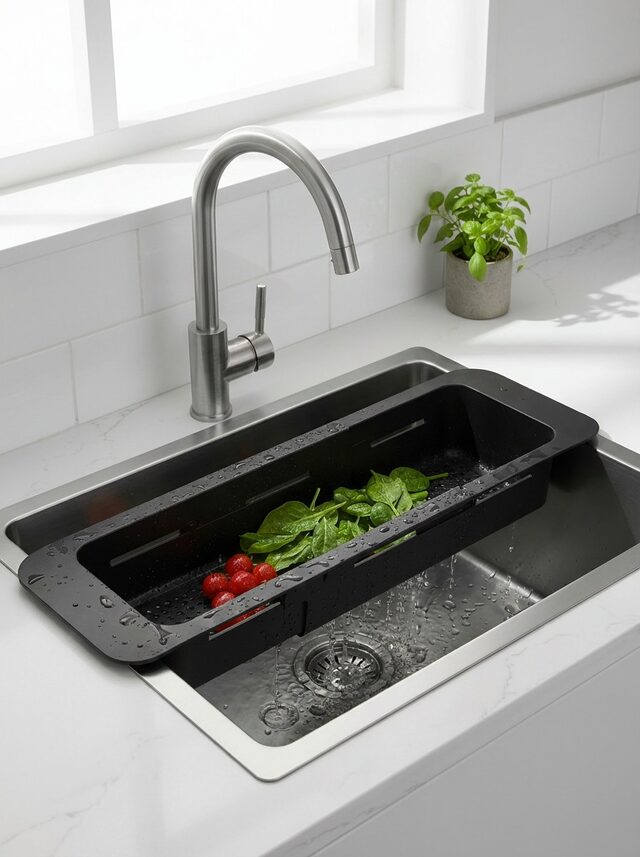
Your sink can harbor more bacteria than a toilet seat. Use a quality drain system with an anti-odor design, and clean your sink with hot soapy water after handling raw meat. Replace your strainer basket if it shows signs of wear or damage.
The Clean Kitchen Checklist
- Separate boards for raw and ready-to-eat foods
- Wash hands for 20 seconds between tasks
- Sanitize surfaces after raw meat contact
- Replace worn cutting boards and strainers
- Keep your drain system clean and unclogged